Proper biohazard waste removal is crucial to prevent the spread of infectious diseases and protect public health. Superior Medical Waste Disposal specializes in the safe and compliant handling of biohazard waste. Contact us today for a biohazard waste disposal services quote.
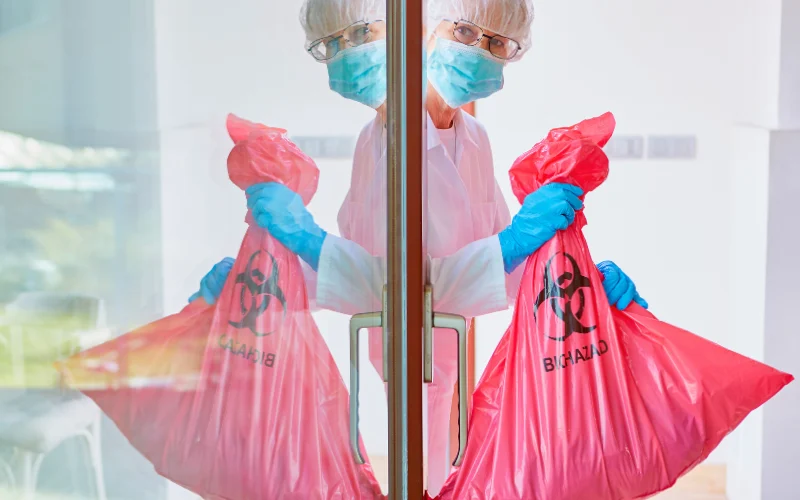
What is Biohazard Waste?
Biohazard, also called infectious waste (such as blood, body fluids, and human cell lines), is waste contaminated with potentially infectious agents or other materials that are deemed a threat to public health or the environment.
The red biohazard bags and containers seen throughout healthcare facilities are used to store biohazard waste safely. Sharps are stored in puncture-resistant containers prior to being placed inside the red biohazard bin for added protection. The waste is removed by a biohazard company on a scheduled basis and replaced with a clean container at every service.
Biohazard Producer Best Practices
Prior to producing, storing, or removing your facility’s biohazard, make sure to contact your local environmental authority for any questions on the regulations and laws. Ask about the handling procedures and biohazard waste pick up for your particular state. For example, the regulations for biohazard waste disposal in Michigan stipulate that you are only allowed to store biohazards for up to 90 days before they have to have them properly removed by a licensed medical waste hauler.
Treatment & Disposal of Biohazard Waste
Treating biohazard typically involves an autoclave. This machine steam heats the waste at extreme temperatures for a long enough time to completely disinfect all potential biological threats. After the waste has been steam treated it is considered regular waste and is disposed of in a sanitary landfill. At Superior, our biohazard is autoclaved as well as shredded to reduce waste volume by 70% before going to the landfill. Learn more about our process here.
Biohazard Waste Frequently Asked Questions (FAQ)
Are unused or expired pharmaceuticals considered Biohazard Waste?
No, Pharmaceutical waste is not considered a biohazard but a pharmaceutical waste or universal waste and it must be handle separately.
How long can we store biohazard before hiring a service to pick it up?
This varies state-to-state. In Michigan, you have up to 90 days to store biohazard before having to dispose of it. Contact your local authority to find out how long you can hold onto RMW.
Where should our facility store our biohazard prior to having our service remove it?
You should store your medical waste in a lab or closet with a properly labeled door stating that this room is specifically meant for biohazard storage. Ask your Superior Medical Waste Representative for a biohazard storage container that perfectly fits your space.
Why Manage Biohazard Waste Differently than Regular Trash?
Biohazard waste raises concerns over potential health hazards. Improper disposal of biohazard has lead to infection and disease outbreak. This concern grew in the 1980s when health officials found used needles and biohazard washing up on the shores of multiple East coast beaches. Abiding by all medical waste regulations reassures that the material is being safely disposed of. Not following RMW laws can cause facilities to be prosecuted by local and federal health agencies.
Who Regulates Biohazard Disposal?
Biohazard is primarily regulated by state environmental and health departments. However, it is also regulated by the Centers for Disease Control (CDC), Occupational Safety and Health Administration (OSHA), Department of Transportation (DOT), and the U.S. Food and Drug Administration (FDA). There are many hands in this pot but one should contact their state environmental protection agency for more information on medical waste regulations.
What categories of waste are considered biohazard waste?
Biohazardous waste includes the following categories:
- Sharps, including but not limited to hypodermic needles, blades, and slides. For more information on recognizing sharps, read How to Dispose of Sharps.
- Dry biohazardous waste
- Contaminated cultures, petri dishes, and other culture flasks
- Infectious agents
- Wastes from bacteria, viruses, spores, or live and attenuated vaccines
- Waste contaminated with excretion, exudates, or secretations from infectious humans or animals
- Paper towels, Kim wipes, bench paper, or any other items contaminated with biohazard materials
- Liquid biohazardous waste
- Human or animal blood
- Human or animal blood elements
- Human or animal bodily fluids or semi-liquid materials
- Human anatomical specimens
- Animal carcasses and body parts if exposed to biohazardous materials
What are different names used for Biohazard Waste?
Here are some other names commonly used for biohazard waste:
- Medical Waste
- Biomedical Waste
- Healthcare Waste
- Infectious Waste
- Clinical Waste
- Red Bag Waste
- UN3291 PG II
What are some examples of biohazard waste?
Here are some examples of biohazard waste:
- Sharps
- Bandages
- IV Catheters
- Used Gloves
- Covid-19 Tests
- Expired Vaccines
- Blood saturated Items
Superior Will Help With Biohazard Waste Pick Up & Other Concerns
We know more than anyone how complicated Regulated Medical Waste regulations can be. At Superior, we are professionals in biohazard waste removal. We are up-to-date on all federal and local RMW laws, and we’re committed to leading the way among biohazardous waste disposal companies. If your facility needs help classifying, storing, transporting, or staying compliant: contact our biohazard waste company today for a free consultation.