Proper sharps disposal services are crucial to prevent the spread of infectious diseases and protect public health. Superior Medical Waste Disposal specializes in the safe and compliant handling of sharps waste. Is your facility looking for medical sharps disposal companies? Contact us for a sharps removal quote today.
What Are Sharps, And Why Are Sharps Pick Up Services Important?
“Sharps” include needles, as well as items such as scalpels, lancets, razor blades, scissors, metal wire, retractors, clamps, pins, staples, cutters, and glass items. Essentially, any object that is able to cut the skin can be considered a “sharp.” Used and unused sharps (syringes) are considered a Regulated Medical Waste (RMW) that requires medical sharps disposal services. They are a solid waste that may be contaminated by blood or other potentially infectious materials. The best agencies to follow when considering safe sharps removal are OSHA, EPA, and the EGLE.
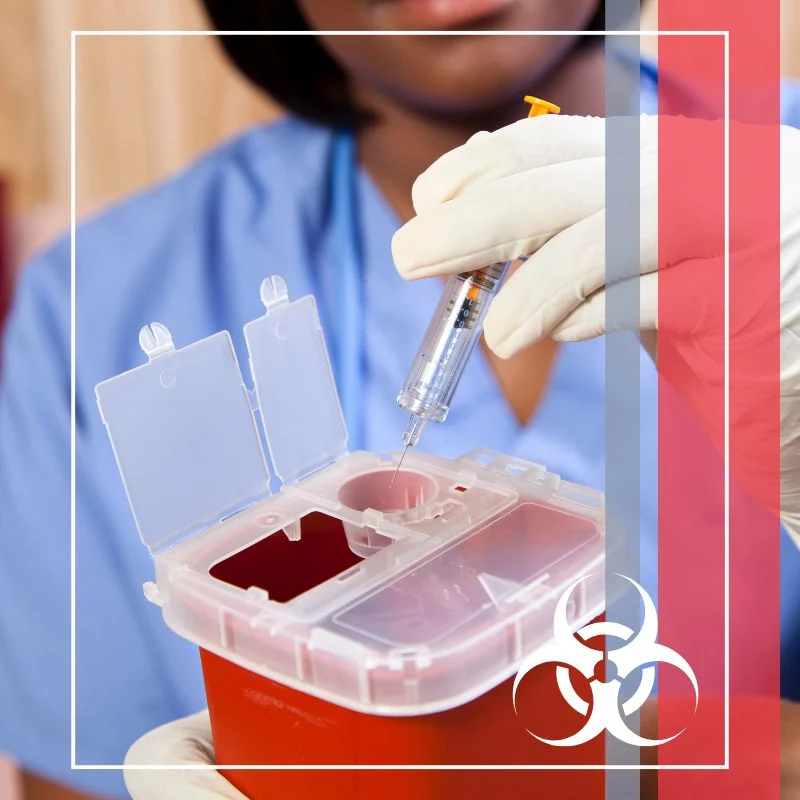
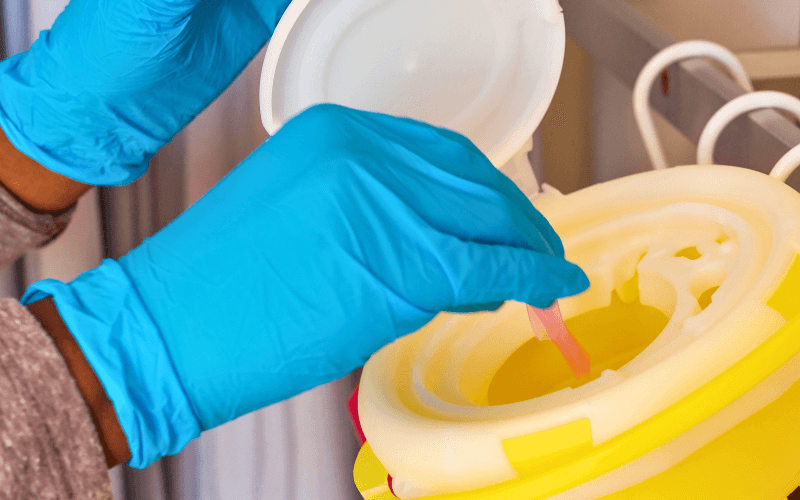
The red biohazard bags and containers seen throughout healthcare facilities are used to store Regulated Medical Waste safely. Sharps are stored in puncture-resistant containers prior to being placed inside the red biohazard bin for added protection. The RMW is removed on a scheduled basis and replaced with a clean container at every service. Our team is here to provide you with regular sharps pick up services.
Facilities producing used sharps often produce other medical wastes
- Cultures and stocks of infectious agents and associated biologicals, including laboratory waste, biological production wastes, discarded live and attenuated vaccines, culture dishes, and related devices.
- Liquid human and animal waste, including blood and blood products and body fluids, but not including urine or materials stained with blood or body fluids.
- Pathological waste.
- Contaminated wastes from animals that have been exposed to agents infectious to humans, these being primarily research animals.
Sharps Best Practices
Improper management of discarded needles and other sharps can pose a health risk to the public and waste workers. For example, discarded needles may expose healthcare workers to potential needle stick injuries and potential infection when containers break open or when needles are mistakenly placed into the wrong container. Discarded sharps should always be placed in a rigid container prior to being placed in a medical waste bin for the sharps collector.
Having a contract with a medical waste disposal service is a good way to protect yourself and your staff. These containers should be removed by a qualified sharps collector on a regular basis to help prevent unwanted needle stick injuries that can take place by over-storing sharps/syringes.
Treatment & Disposal of Sharps Containers
As a leading sharps container disposal service, our team follows a strict protocol. Treating sharps waste typically involves an autoclave. Although it can also be incinerated, microwaved, and chemically treated. The autoclave steam heats sharps containers at extreme temperatures for a long enough time to completely disinfect all potential biological threats. After the sharps are disinfected, the waste is shredded until it is unrecognizable. At this point, the waste is no longer a health hazard and is disposed of in a sanitary landfill. Learn more about our process.
Sharps Waste Frequently Asked Questions (FAQ)
Are sharps handled the same way as Regulated Medical Waste?
Yes, after being placed in a rigid UN3291 PG II container. The sharps container is placed in our medical waste bin/box filled with other medical waste. It is then transported to the transfer station or treatment center.
How long can we store sharps containers before having them disposed of?
This varies state-to-state. In Michigan, you have up to 90 days to store medical waste before having to dispose of it. Contact your local authority to find out how long you can hold onto RMW.
Where should our facility store our sharps containers prior to having your service remove it?
Our customers are left with a properly labeled biohazard waste bin where they store their full sharps containers in. Ask your Superior Medical Waste Representative for a brochure on the different waste bins we offer.
Who Regulates Sharps Disposal (RMW)?
Sharps are a form of medical waste. Regulated Medical Waste is primarily regulated by state environmental and health departments. However, it is also regulated by the Centers for Disease Control (CDC), Occupational Safety and Health Administration (OSHA), Department of Transportation (DOT), and the U.S. Food and Drug Administration (FDA). There are many hands in this pot but one should contact their state environmental protection agency for more information on medical waste regulations.
What are different names for sharps?
Some different names for sharps are:
- Syringes
- Needles
- Healthcare Waste
- Infectious Waste
- Clinical Waste
- Biohazard
- UN3291 PG II
What are some typical producers of sharps waste?
Here are some examples of typical sharps waste producers:
- Healthcare Professionals
- Dentists
- Veterinarians
- Vaccine Clinics
- Tattoo Parlors
- Schools
- Aestheticians
What are needle stick injuries?
Needlestick injuries are wounds caused by needles that accidentally puncture the skin. According to the CDC, around 385,000 needle stick injuries happen every year to healthcare professionals. Needle stick injuries can transmit serious diseases, such as HIV and hepatitis.
These injuries can occur at any time when people use, disassemble, or dispose of needles. The most common time for a sharps injury to occur is during and injection or during the discarding of needle into sharps container.
What is the liability of sharps handliong and disposal?
The second greatest threat to dealing with used needles is the liability that comes with it. OSHA requires businesses to provide proper training and equipment to their staff. One training that is required annually is bloodborne pathogens training.
OSHA also regulates how companies handle needle stick injuries after they happen. Employees injured by needles but document the incident in a needle stick injury log. They should seek medical advice for the next steps to take.
Superior Can Help With All Sharps Removal Concerns
We know more than anyone how complicated Sharps disposal can be. At Superior, we are professionals in sharps disposal services. We are up-to-date on all federal and local RMW laws. If your facility needs help classifying, storing, transporting, or staying compliant, contact our needle disposal company today for a free consultation.